Named examples make the product family concrete. They are starting points for comparison, not a claim of STAH inventory, authorization, endorsement, or suitability for every site.
Fluke / Prüftechnik
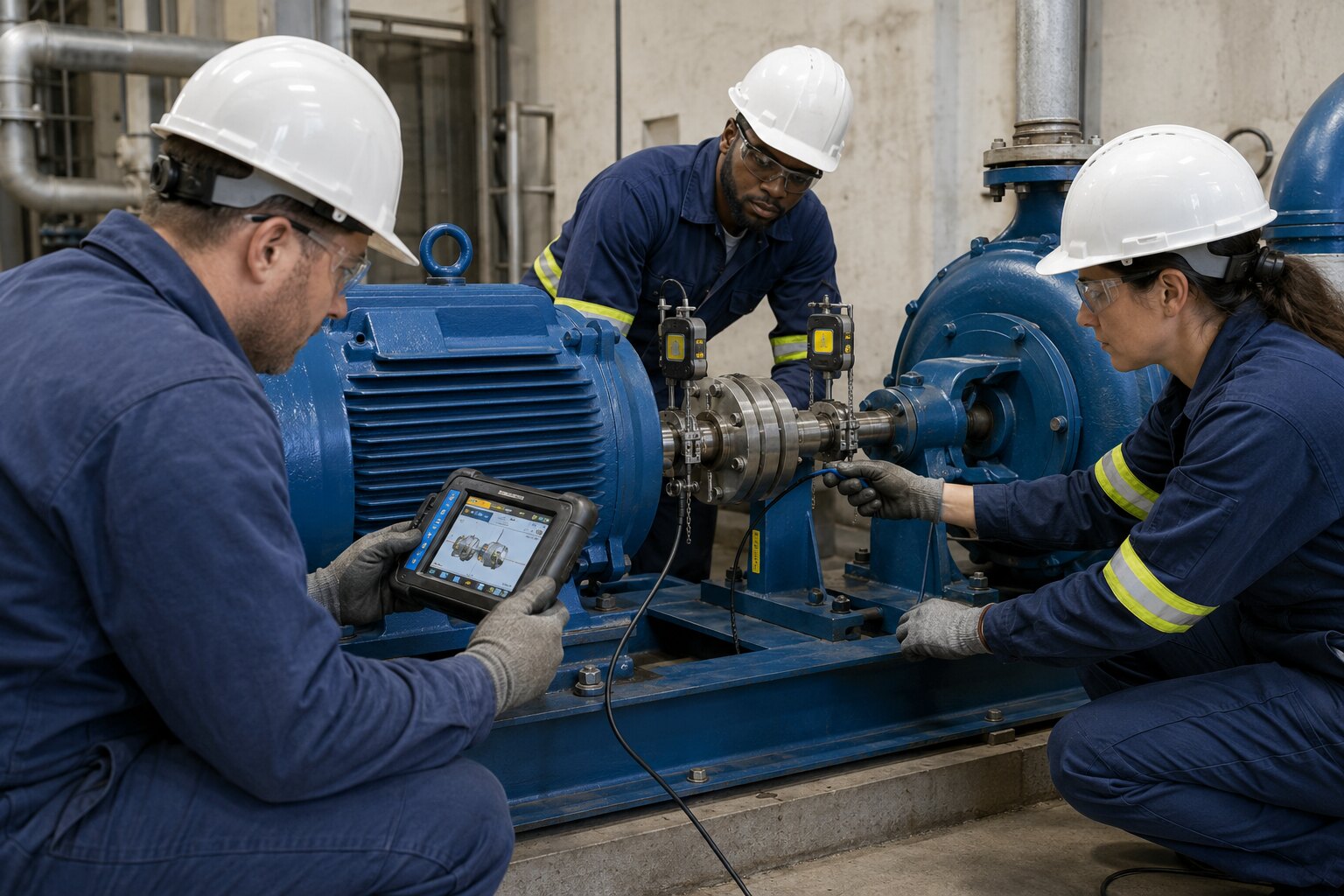
ROTALIGN touch
Useful for: Advanced shaft alignment on horizontal, vertical, and complex rotating-machine arrangements.
A guided laser system can shorten measurement and correction work while documenting as-found and as-left results. Its greatest value comes when the crew also controls soft foot, pipe strain, thermal movement, tolerances, and final verification.
Confirm before selection
Machine geometry and required alignment applications
Brackets, sensors, and hazardous-area needs
Tolerance standard, reporting, and technician training
Useful for: Versatile shaft alignment, soft-foot checks, machine trains, vertical machines, and movement measurement.
The system supports several measurement methods and automatically documents results. It is useful for teams that need one robust platform for normal motor-pump work as well as more complex machinery configurations.
Confirm before selection
Required measurement programs and accessories
Display-device and site-connectivity policy
As-found/as-left reporting and calibration process
Product models, features, software, pricing, regional availability, and support can change. Confirm the current configuration directly with the manufacturer or an authorized supplier before purchase.
Selection logic
Fit the instrument to the work—not the other way around.
Useful technology fits the failure mode, asset, user, environment, and follow-up workflow. The instrument is only one part of the system; sensors, accessories, software, training, calibration, data ownership, and response responsibilities affect the value it can deliver.
For laser alignment and balancing tools, that means beginning with shaft size, span, and machine geometry, working in the context of motor-pump trains, and preserving enough evidence to support application-fit recommendation.
Selection caution
A product name is not a universal recommendation. Current model status, specifications, regional availability, safety requirements, compatibility, and commercial terms must be confirmed before selection.
Specification checks
The decisions behind a sound technical selection.
The comparison should explain how the complete configuration will be used—not only which model has the longest feature list.
Primary focus: Measurement modes and movement guidance. Expected record: Hardware and bracket needs. Typical setting: Fans and blowers.
03
Confirm tolerance, reporting, and training expectations
Primary focus: Balancing channels and phase input. Expected record: Training and procedure requirements. Typical setting: Gearbox trains.
04
Plan field implementation and care
Primary focus: Ruggedness, reporting, and field workflow. Expected record: Availability and support confirmation. Typical setting: Installation and overhaul work.
Selection path
A buyer’s path from need to implementation.
A sound purchase starts before a quotation and continues through training, data handling, and support. Open a step for selection guidance.