AI and Machine Learning for industrial reliability

sales@stahcorp.com
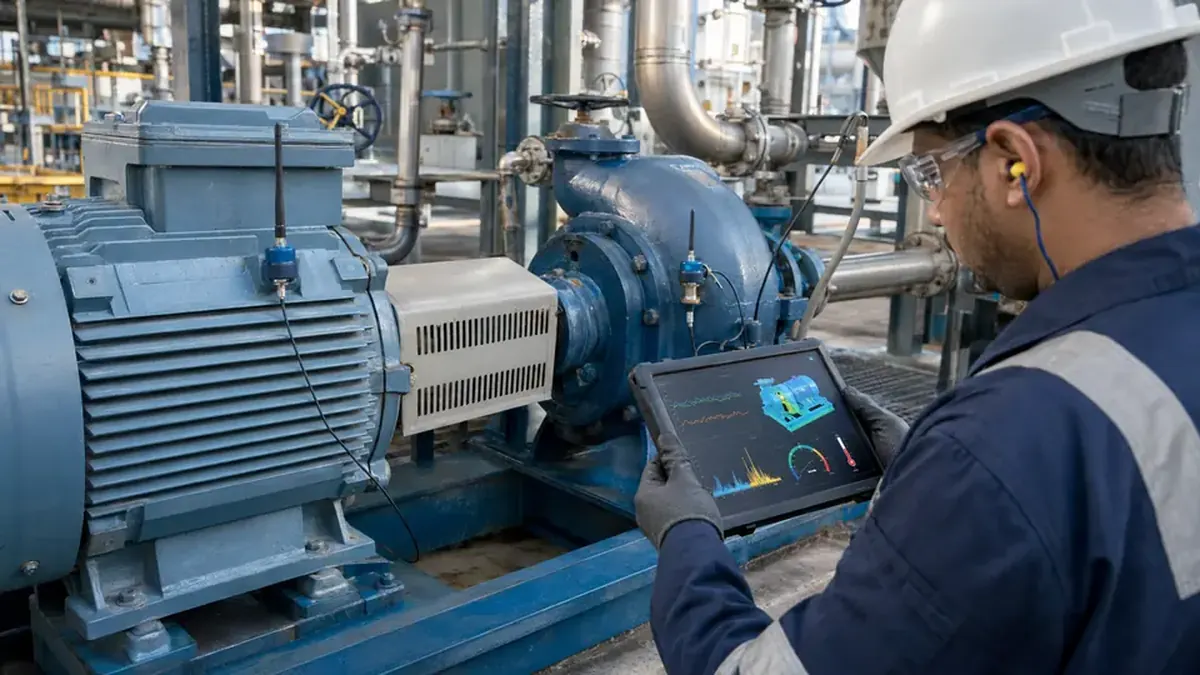
Connected machine sensors feeding governed reliability data into an industrial analytics interface

Products · Connected evidence · Governed analytics

Reliability Data Architecture for AI and Machine Learning

A reliable architecture connects condition data, asset context, process state, and maintenance history so AI and Machine Learning can be validated and used responsibly.

STAHDATAAI/ML FOUNDATION
Connected machine sensors feeding governed reliability data into an industrial analytics interface
Technology applied to an industrial decision
Back to Products

What the technology supports

What the technology must help your team do.

  • Interoperable sensor, historian, CMMS, and asset data
  • Time alignment, units, naming, and operating-state context
  • Edge and cloud analytics requirements
  • Access control, traceability, retention, and cybersecurity

Real equipment examples

Representative products to evaluate.

Named examples make the product family concrete. They are starting points for comparison, not a claim of STAH inventory, authorization, endorsement, or suitability for every site.

Siemens

Senseye Predictive Maintenance

Useful for: Scaling predictive-maintenance screening across industrial asset fleets using existing operational and maintenance data.

The software is designed to help teams identify attention-worthy behavior across many machines and organize predictive-maintenance work. It is useful when asset hierarchy, data history, operating context, and a clear human-response process already exist or can be built.

Confirm before selection
  • Supported data sources and minimum data history
  • Asset hierarchy, labels, and operating-state context
  • Validation, user roles, cybersecurity, and model-monitoring plan
View official manufacturer page
IBM

Maximo Application Suite — Asset Performance Management

Useful for: Connecting asset health, predictive analytics, reliability strategy, and maintenance execution in an enterprise workflow.

Maximo APM brings condition and operational data together with work history and asset-management processes. It is useful when an organization wants analytical findings to lead into prioritization, planning, and tracked maintenance action rather than remain in a separate dashboard.

Confirm before selection
  • Existing EAM, historian, and IoT integration
  • Use-case, data quality, and model-validation requirements
  • Licensing, implementation, governance, and change-management scope
View official manufacturer page

Product models, features, software, pricing, regional availability, and support can change. Confirm the current configuration directly with the manufacturer or an authorized supplier before purchase.

Selection logic

Fit the instrument to the work—not the other way around.

Useful technology fits the failure mode, asset, user, environment, and follow-up workflow. The instrument is only one part of the system; sensors, accessories, software, training, calibration, data ownership, and response responsibilities affect the value it can deliver.

For reliability data architecture for ai and machine learning, that means beginning with interoperable sensor, historian, cmms, and asset data, working in the context of condition-monitoring platforms, and preserving enough evidence to support reference data architecture.

Selection caution

A product name is not a universal recommendation. Current model status, specifications, regional availability, safety requirements, compatibility, and commercial terms must be confirmed before selection.

Specification checks

The decisions behind a sound technical selection.

The comparison should explain how the complete configuration will be used—not only which model has the longest feature list.

  1. 01

    Map use cases, systems, owners, and data flows

    Primary focus: Interoperable sensor, historian, CMMS, and asset data. Expected record: Reference data architecture. Typical setting: Condition-monitoring platforms.

  2. 02

    Define a minimum reliable data model and quality controls

    Primary focus: Time alignment, units, naming, and operating-state context. Expected record: Integration and context requirements. Typical setting: Mixed-vendor sensor fleets.

  3. 03

    Pilot ingestion, context, analytics, and alert review

    Primary focus: Edge and cloud analytics requirements. Expected record: Data-quality and governance controls. Typical setting: Plant historians and maintenance systems.

  4. 04

    Plan governed scale-up, monitoring, and support

    Primary focus: Access control, traceability, retention, and cybersecurity. Expected record: Pilot and scaling roadmap. Typical setting: AI and Machine Learning pilots and production analytics.

Selection path

A buyer’s path from need to implementation.

A sound purchase starts before a quotation and continues through training, data handling, and support. Open a step for selection guidance.

  1. Map use cases, systems, owners, and data flows for Reliability Data Architecture for AI and Machine Learning
    01

    Map use cases, systems, owners, and data flows

    Open detail
  2. Define a minimum reliable data model and quality controls for Reliability Data Architecture for AI and Machine Learning
    02

    Define a minimum reliable data model and quality controls

    Open detail
  3. Pilot ingestion, context, analytics, and alert review for Reliability Data Architecture for AI and Machine Learning
    03

    Pilot ingestion, context, analytics, and alert review

    Open detail
  4. Plan governed scale-up, monitoring, and support for Reliability Data Architecture for AI and Machine Learning
    04

    Plan governed scale-up, monitoring, and support

    Open detail

Comparison record

What a defensible product comparison contains.

  • The asset, audience, or system boundary and the decision being supported
  • The relevant operating state, access conditions, source records, and known limitations
  • The observations or results related to time alignment, units, naming, and operating-state context
  • The comparison, technical reasoning, confidence, priority, and alternative explanations
  • The owner, timing, verification method, and trigger for escalation or follow-up

Before the quote

Questions to ask before selecting a configuration.

  • Was the evidence collected under a representative and documented condition?
  • Does another indicator support—or conflict with—the first conclusion?
  • Could access, setup, data quality, environment, or operating state explain the result?
  • Is the proposed action proportionate to condition, consequence, and uncertainty?
  • What new evidence would confirm that the action worked?
DELIVERABLES

What to confirm

  • Reference data architecture
  • Integration and context requirements
  • Data-quality and governance controls
  • Pilot and scaling roadmap
APPLICATIONS

Common applications

  • Condition-monitoring platforms
  • Mixed-vendor sensor fleets
  • Plant historians and maintenance systems
  • AI and Machine Learning pilots and production analytics
SELECTION NOTE
A reliable program using AI and Machine Learning begins with reliable context: the asset, time, operating state, measurement method, and maintenance history.

Start a conversation

Talk with STAH about reliability data architecture for ai and machine learning.

Share the asset, operating concern, data opportunity, or reliability goal. STAH can help shape a focused, human-reviewed next step.