AI and Machine Learning for industrial reliability

sales@stahcorp.com
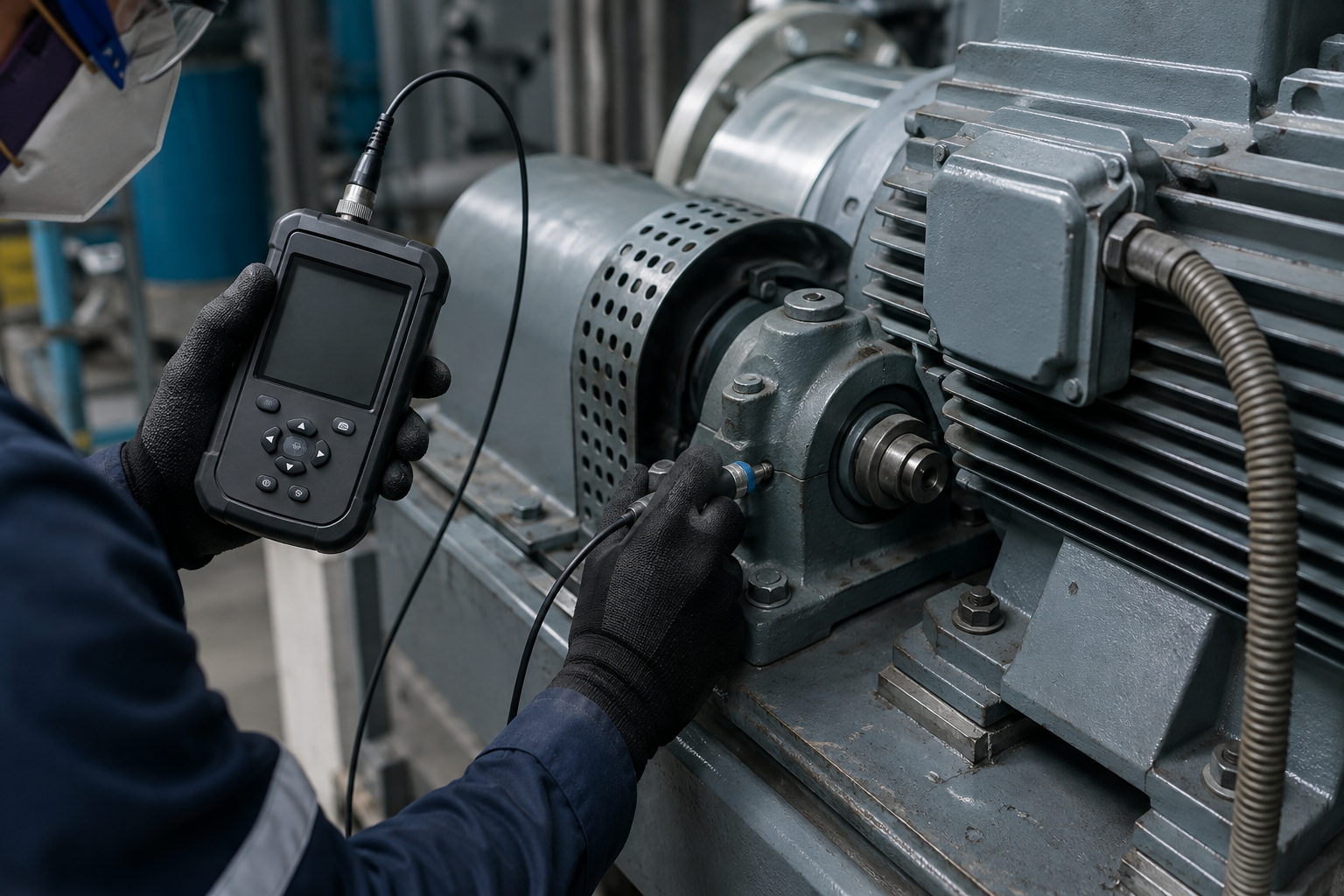
Engineer taking vibration measurements on a motor-pump train

Services · Rotating-equipment diagnostics

Vibration analysis

Vibration analysis evaluates machine motion and frequency content to identify patterns associated with mechanical and dynamic faults.

STAHVIBMACHINE MOTION
Engineer taking vibration measurements on a motor-pump train
Field execution and diagnostic evidence
Back to Services

What the service evaluates

The field questions this service is built to answer.

  • Imbalance and misalignment
  • Bearing and gear defects
  • Looseness and structural response
  • Resonance and process-related vibration

Inside the engagement

What happens before, during, and after the site visit.

A focused service should answer a defined technical question, not merely produce readings. Good execution preserves operating context, measurement settings, limitations, and the chain of reasoning from observation to recommendation.

For vibration analysis, that means beginning with imbalance and misalignment, working in the context of motors and pumps, and preserving enough evidence to support condition by measurement location.

Field-use caution

A field measurement is evidence, not an automatic diagnosis. Access, loading, configuration, history, and complementary checks determine what the result can support.
DELIVERABLES

Typical deliverables

  • Condition by measurement location
  • Relevant spectra and waveforms
  • Probable fault interpretation
  • Action and follow-up recommendation
APPLICATIONS

Common applications

  • Motors and pumps
  • Fans and blowers
  • Gearboxes and compressors
  • Turbines and high-criticality trains

Behind each reading

What the field team is doing while the instrument collects data.

Preparation, safe access, repeatability, context, and technical review make a measurement useful.

  1. 01

    Confirm machine configuration, speed, load, and measurement points

    Primary focus: Imbalance and misalignment. Expected record: Condition by measurement location. Typical setting: Motors and pumps.

  2. 02

    Collect overall, spectrum, waveform, and phase data as appropriate

    Primary focus: Bearing and gear defects. Expected record: Relevant spectra and waveforms. Typical setting: Fans and blowers.

  3. 03

    Compare patterns, baselines, and trends

    Primary focus: Looseness and structural response. Expected record: Probable fault interpretation. Typical setting: Gearboxes and compressors.

  4. 04

    Correlate findings with operating and maintenance history

    Primary focus: Resonance and process-related vibration. Expected record: Action and follow-up recommendation. Typical setting: Turbines and high-criticality trains.

Service record

What should appear in a complete field record.

  • The asset, audience, or system boundary and the decision being supported
  • The relevant operating state, access conditions, source records, and known limitations
  • The observations or results related to bearing and gear defects
  • The comparison, technical reasoning, confidence, priority, and alternative explanations
  • The owner, timing, verification method, and trigger for escalation or follow-up

Analyst review

What gets challenged before the report is issued.

  • Was the evidence collected under a representative and documented condition?
  • Does another indicator support—or conflict with—the first conclusion?
  • Could access, setup, data quality, environment, or operating state explain the result?
  • Is the proposed action proportionate to condition, consequence, and uncertainty?
  • What new evidence would confirm that the action worked?
FIELD NOTE
The same vibration level can mean different things depending on frequency, direction, speed, load, and machine design.

Start a conversation

Talk with STAH about vibration analysis.

Share the asset, operating concern, data opportunity, or reliability goal. STAH can help shape a focused, human-reviewed next step.