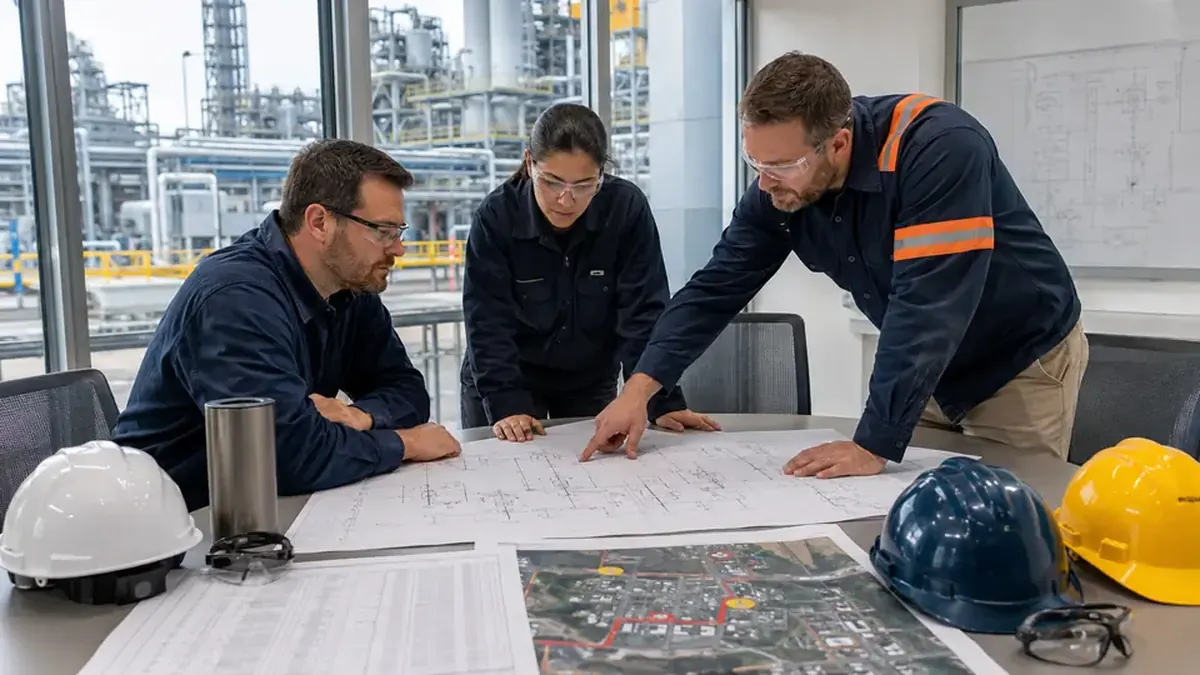
Why this step matters
Begin with a precise boundary and decision.
This step turns a broad concern into a defined technical question. It establishes what is included, what is excluded, which operating conditions matter, and how the result will be used.
Confirm the people, records, access, safety limits, asset context, and decision criteria before work begins.
Applied to Condition Analytics with AI and Machine Learning
- Technical focus: Data readiness and asset-context mapping
- Where it applies: Vibration and rotating-equipment fleets
- Expected evidence: Data-readiness and use-case assessment
- Working principle: A model that cannot show its evidence, limits, and review path should not control a high-consequence maintenance decision.
What happens in practice
- 01Prepare the context
Confirm the asset, people, records, operating state, and boundaries needed to address data readiness and asset-context mapping.
- 02Make the work traceable
Confirm the people, records, access, safety limits, asset context, and decision criteria before work begins.
- 03Confirm the handoff
Check that the result can support data-readiness and use-case assessment and that unresolved uncertainty is visible.
A sample of how this step may unfold
A maintenance team requests focused technical support after an exception appears during an inspection, route, or operating review. Before any work begins, the team identifies “Data readiness and asset-context mapping” as the immediate focus. It agrees that the step should produce data-readiness and use-case assessment, and it records what is outside the present scope. The example closes with the principle that a model that cannot show its evidence, limits, and review path should not control a high-consequence maintenance decision.
This is an educational example, not a description of a specific client engagement or a guaranteed result.Evidence to expect
What should be visible before moving on.
- A written scope boundary
- The operating decision to support
- Known asset and process context
- Access, safety, and timing constraints
Common mistake
What weakens this step.
Starting with a favorite instrument, test, course, or platform before defining the decision it must support.
What good looks like
- Everyone can state the same technical question
- The boundary and exclusions are visible
- The expected output will support a real decision
Where this step ends
A clear record, a clear limit, and a clear next move.
A good closeout leaves the next person with a practical explanation of what was done, what the evidence supports, what remains uncertain, and what should happen next. For this capability, the working principle remains: A model that cannot show its evidence, limits, and review path should not control a high-consequence maintenance decision.