AI and Machine Learning for industrial reliability

sales@stahcorp.com
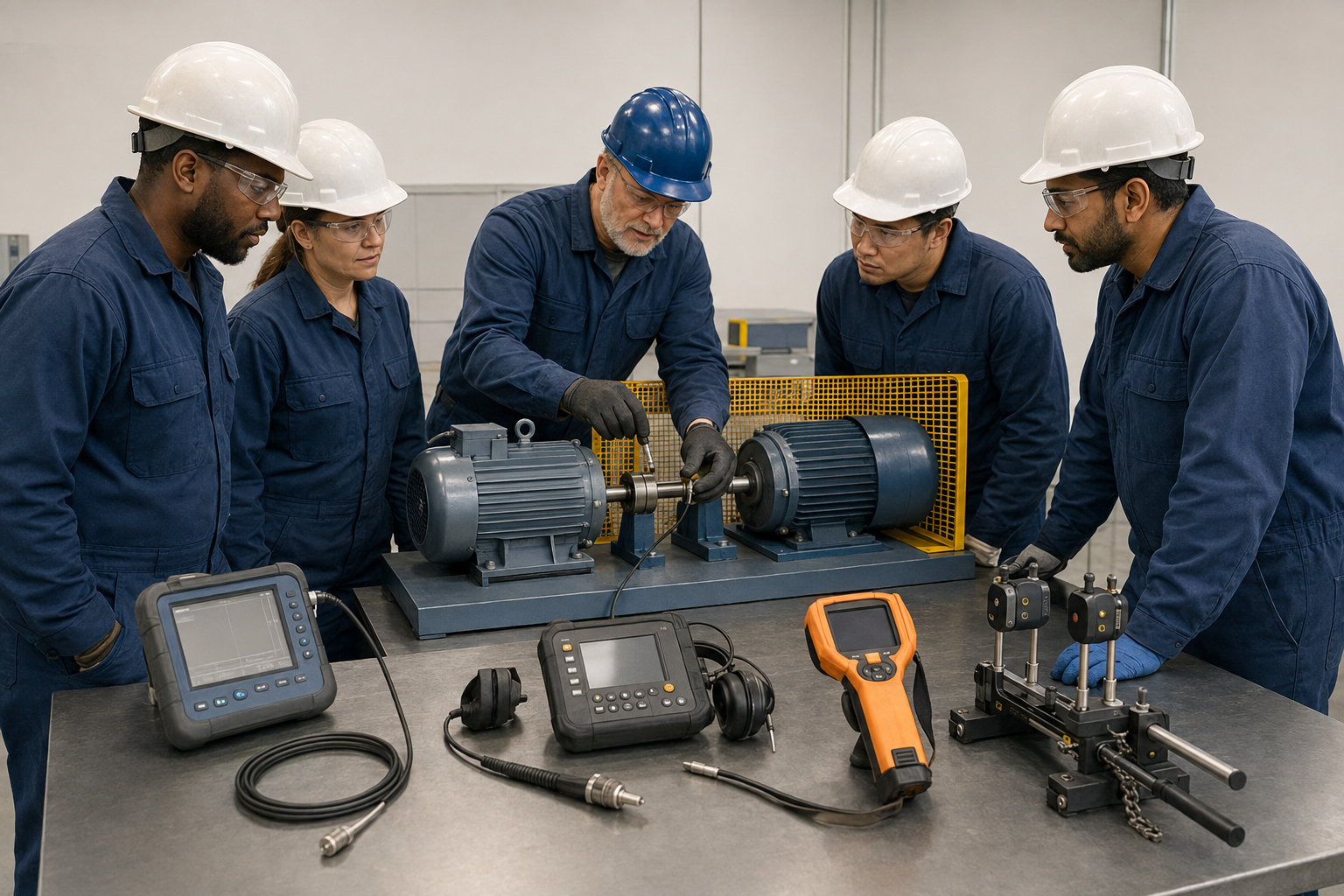
Maintenance engineers learning to use condition-monitoring instruments

Careers · Technical diagnostics

Condition-monitoring career interest

Condition-monitoring work combines disciplined data collection, equipment knowledge, analysis, and clear communication of uncertainty and priority.

STAHCBMTECHNICAL PATH
Maintenance engineers learning to use condition-monitoring instruments
Technical judgment, teamwork, and field contribution
Back to Careers

Capability areas

Where this role can contribute.

  • Vibration, ultrasound, infrared, electrical, or oil methods
  • Repeatable field data collection
  • Failure-mode reasoning
  • Clear technical reporting

Behind the job title

The work, judgment, and collaboration that define the role.

Technical capability is demonstrated through safe execution, disciplined reasoning, clear records, and respectful collaboration. The strongest contribution connects specialist work to the operating decision the client or plant team must make.

For condition-monitoring career interest, that means beginning with vibration, ultrasound, infrared, electrical, or oil methods, working in the context of reliability engineers, and preserving enough evidence to support reliable field notes.

Professional boundary

Interest in a technical field is a starting point; site authorization, role-specific competence, supervision, and continuing development still matter.
DELIVERABLES

What good work looks like

  • Reliable field notes
  • Defensible interpretation
  • Clear report language
  • Professional client coordination
APPLICATIONS

Relevant backgrounds

  • Reliability engineers
  • Condition-monitoring analysts
  • Electrical test professionals
  • Experienced maintenance technicians

Performance in motion

What strong contribution looks like during the work.

The role is visible in how a person prepares, handles uncertainty, communicates, and helps the team close the loop.

  1. 01

    Prepare scope and equipment context

    Primary focus: Vibration, ultrasound, infrared, electrical, or oil methods. Expected record: Reliable field notes. Typical setting: Reliability engineers.

  2. 02

    Execute safe, repeatable measurements

    Primary focus: Repeatable field data collection. Expected record: Defensible interpretation. Typical setting: Condition-monitoring analysts.

  3. 03

    Analyze evidence and limitations

    Primary focus: Failure-mode reasoning. Expected record: Clear report language. Typical setting: Electrical test professionals.

  4. 04

    Communicate priority and next action

    Primary focus: Clear technical reporting. Expected record: Professional client coordination. Typical setting: Experienced maintenance technicians.

How the role contributes

How contribution grows from preparation to ownership.

The role develops through safe preparation, reliable execution, sound interpretation, and clear follow-through.

  1. Prepare scope and equipment context for Condition-monitoring career interest
    01

    Prepare scope and equipment context

    Open detail
  2. Execute safe, repeatable measurements for Condition-monitoring career interest
    02

    Execute safe, repeatable measurements

    Open detail
  3. Analyze evidence and limitations for Condition-monitoring career interest
    03

    Analyze evidence and limitations

    Open detail
  4. Communicate priority and next action for Condition-monitoring career interest
    04

    Communicate priority and next action

    Open detail

Professional practice

What demonstrates dependable technical work.

  • The asset, audience, or system boundary and the decision being supported
  • The relevant operating state, access conditions, source records, and known limitations
  • The observations or results related to repeatable field data collection
  • The comparison, technical reasoning, confidence, priority, and alternative explanations
  • The owner, timing, verification method, and trigger for escalation or follow-up

Candidate reflection

Questions a candidate should be ready to answer.

  • Was the evidence collected under a representative and documented condition?
  • Does another indicator support—or conflict with—the first conclusion?
  • Could access, setup, data quality, environment, or operating state explain the result?
  • Is the proposed action proportionate to condition, consequence, and uncertainty?
  • What new evidence would confirm that the action worked?
ROLE PERSPECTIVE
Strong analysts are careful about both the signal they see and the uncertainty they cannot remove.

Start a conversation

Talk with STAH about condition-monitoring career interest.

Share the asset, operating concern, data opportunity, or reliability goal. STAH can help shape a focused, human-reviewed next step.